0
km²
Square kilometers of seafloor habitat mapped and cataloged across 23 marine zones — from the Mid-Atlantic Ridge to the Coral Triangle.

Deepblue is a global nonprofit advancing marine ecosystem preservation, deep-sea research, and sustainable fisheries. We bridge scientific rigor with urgent action — because the data demands it.
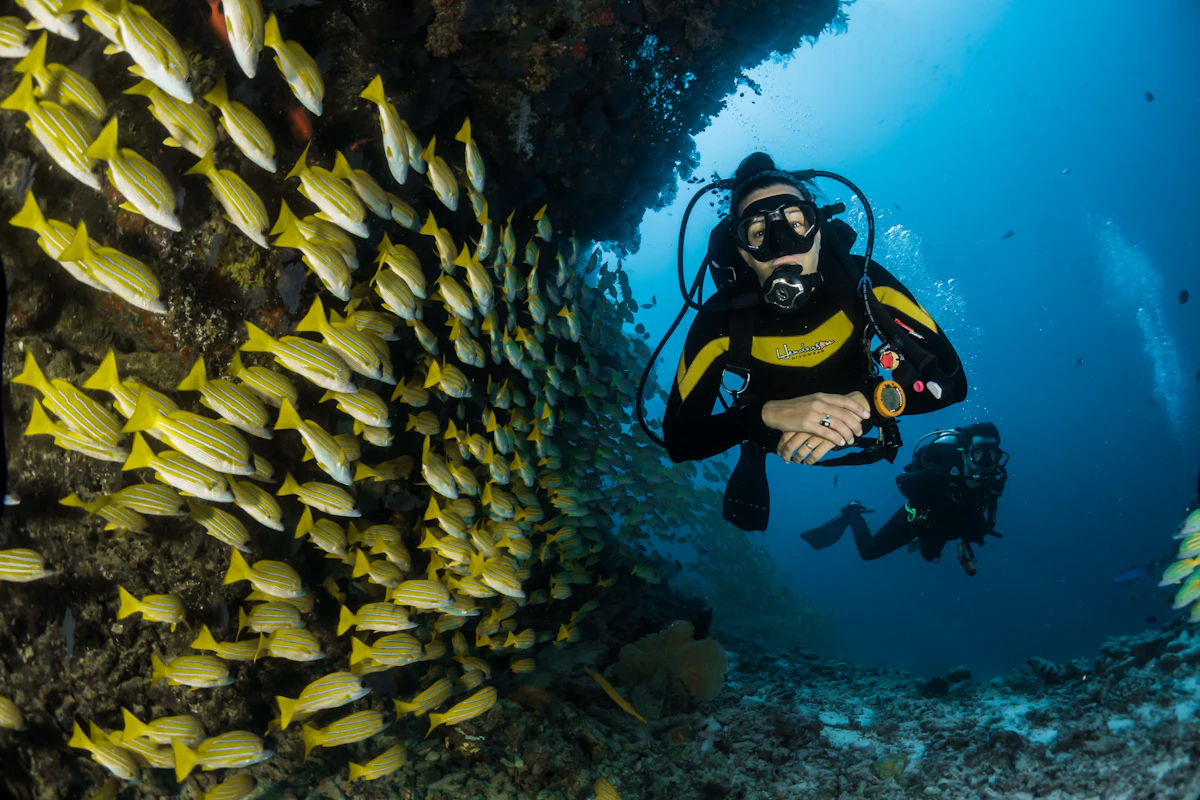
Founded in 2009, Deepblue operates at the intersection of marine science and on-the-water conservation. We conduct long-term ecosystem monitoring, lead deep-sea expeditions into uncharted zones, and partner with coastal communities to build sustainable fishing practices that endure.
Our research teams have mapped over 12,000 square kilometers of seafloor habitat, discovered 34 previously unknown deep-sea species, and contributed data to 17 marine protected area designations. Every number represents a tangible step toward a healthier ocean.
Every dataset we collect and every community we partner with brings the ocean closer to recovery.
 Restoration
Working across 8 reef systems in the Indo-Pacific to identify heat-resilient coral genotypes and establish nursery propagation sites.
Learn more Deep-Sea
Our flagship deep-sea research program deploying autonomous submersibles to survey hydrothermal vents and hadal zone biodiversity below 6,000 meters.
Learn more Fisheries
Partnering with 14 coastal nations to transition artisanal fishing fleets to data-driven sustainability models that protect livelihoods and fisheries alike.
Learn more Migration
Acoustic tagging and satellite tracking of large pelagic species — whales, sharks, and turtles — to map critical migration corridors needing protection.
Learn more Blue Carbon
Quantifying carbon storage in mangroves, seagrass meadows, and kelp forests to integrate coastal ecosystems into global climate frameworks.
Learn moreFrom volcanic seamounts to ice-edge ecosystems, our expeditions push the boundaries of what we know about life beneath the surface.

A 42-day mission aboard RV Horizon to study deep-water circulation patterns beneath the fading Arctic ice sheet. The team deployed 18 sediment traps and recovered 3 years of continuous temperature and salinity data from the Nansen Basin mooring array.
 Active
Deploying deep-towed camera systems to catalog chemosynthetic communities around newly discovered vent fields.
 Active
Mapping Posidonia oceanica meadows across 4 Mediterranean sites to measure carbon storage and habitat health.
 Upcoming
A transatlantic voyage using manta trawl sampling and aerial drones to map microplastic density across the Sargasso Sea.

The whale shark is the largest fish on Earth — reaching lengths of 18 meters — yet it survives on some of the ocean's smallest organisms. Despite their size, these filter-feeding giants remain remarkably vulnerable to ship strikes, entanglement, and habitat disruption.
Deepblue's migration tracking program has followed over 340 tagged individuals across the Indian and Pacific Oceans, identifying critical feeding aggregations in the Philippines, Mexico, and Mozambique. Our data has directly informed seasonal fishing closures in three of these hotspots.
Whether you contribute financially, volunteer your expertise, or amplify our research — every action compounds. Join a community of 12,000+ ocean advocates working to ensure the deep blue remains alive for generations to come.