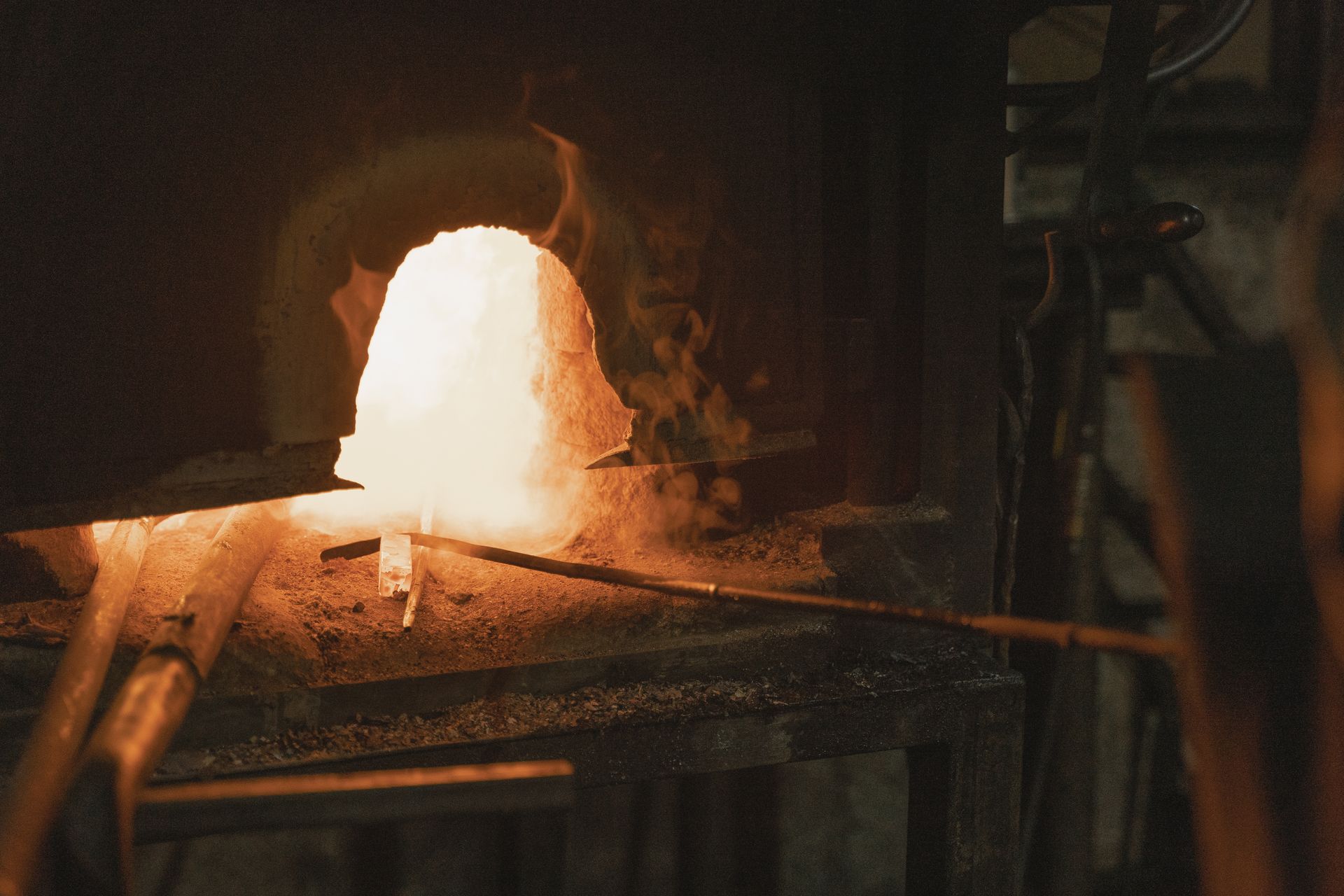
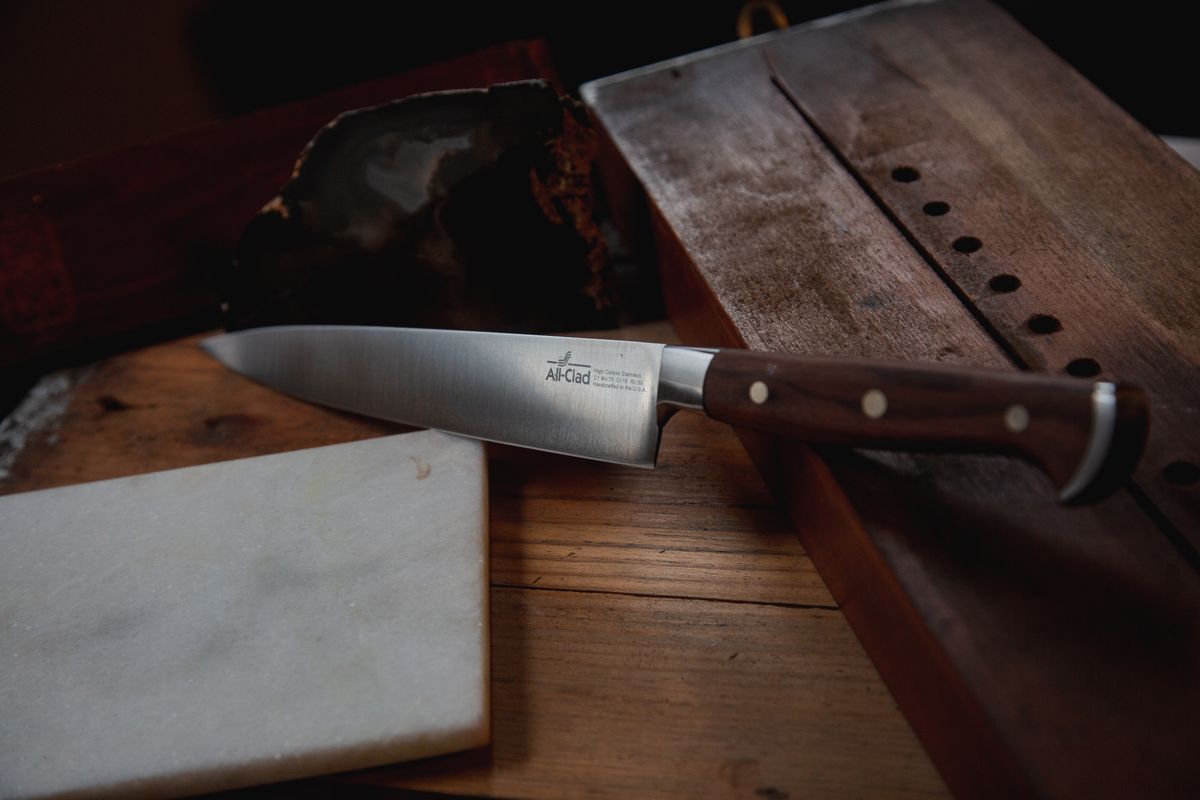
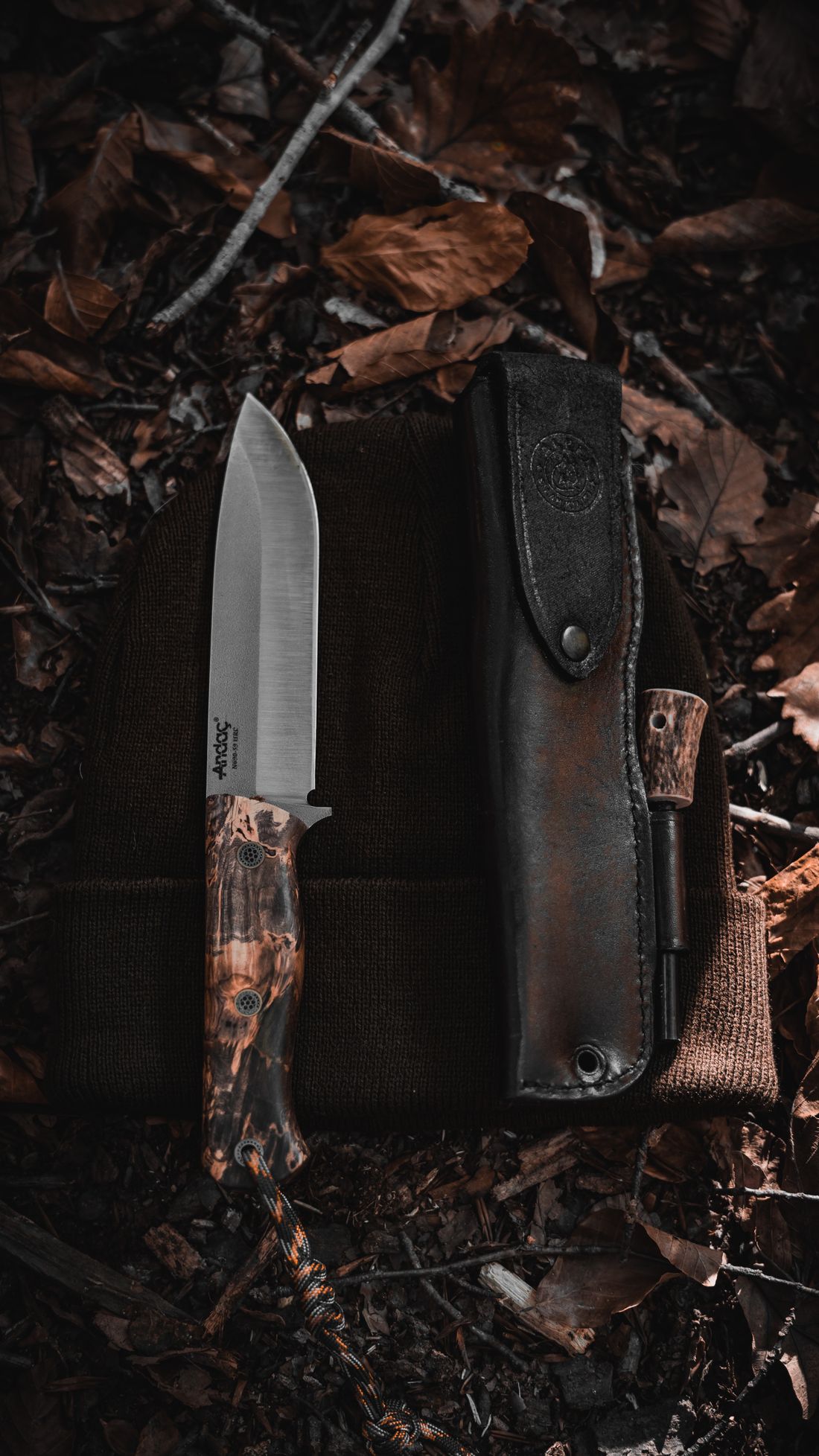
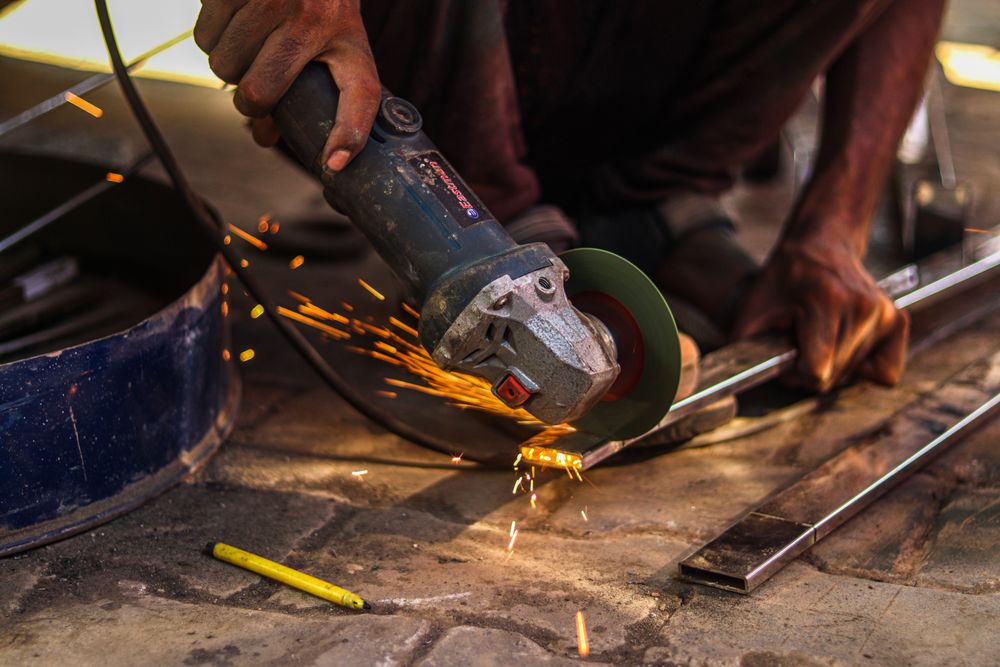
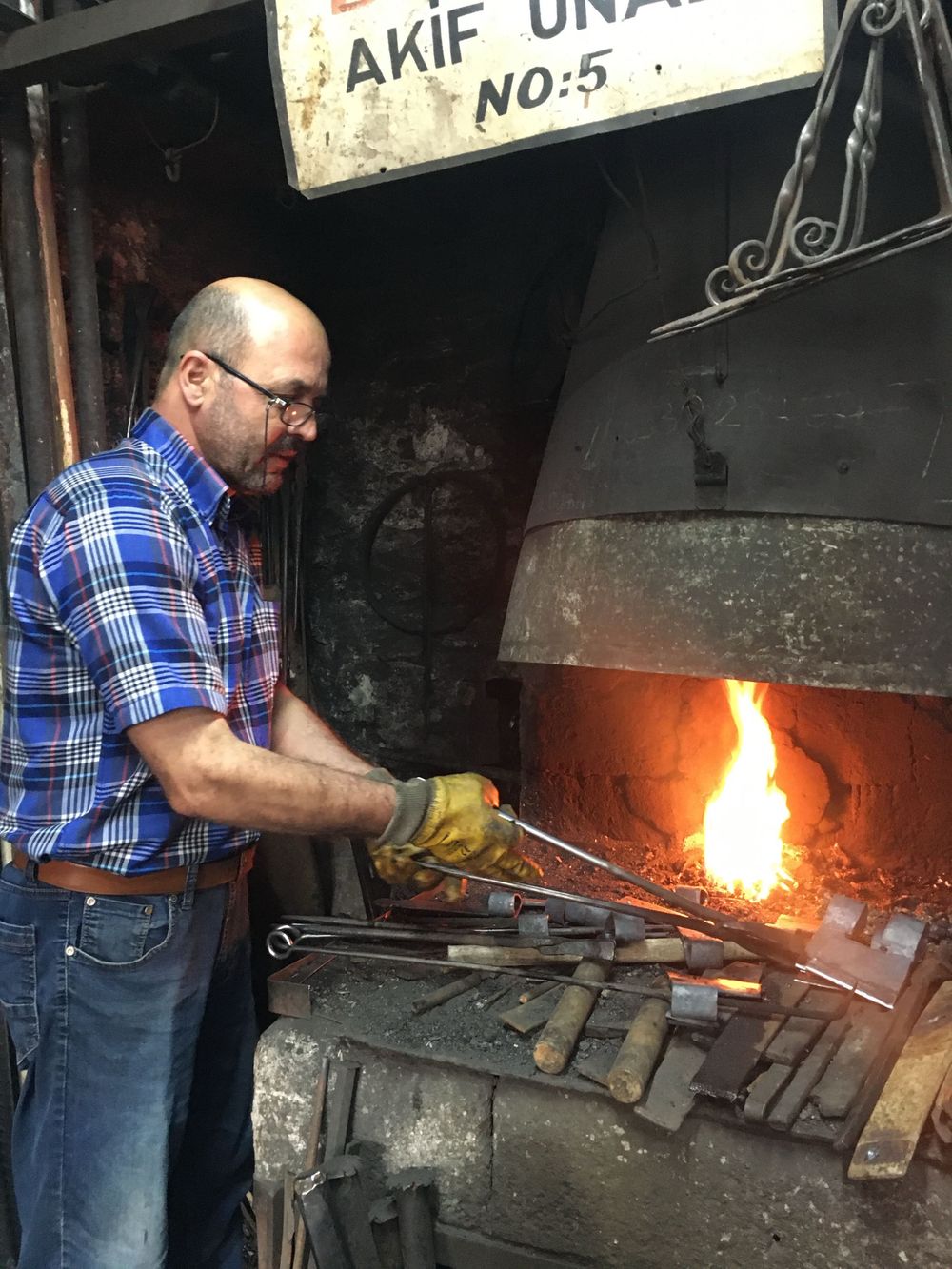
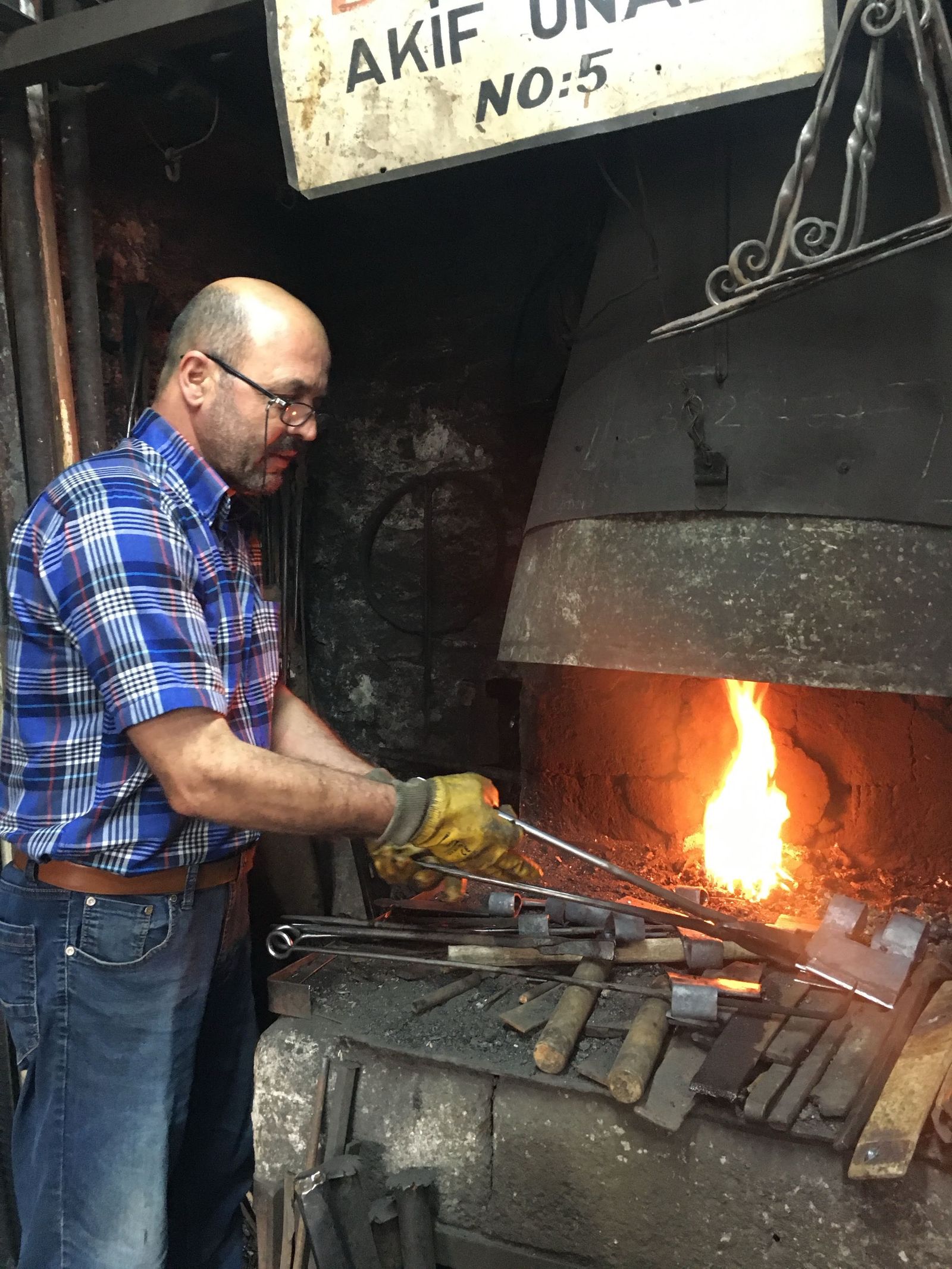
A blacksmith strikes glowing orange steel on the anvil inside a darkened forge
Est. 2008 · 一人鍛冶 — A one-smith forge · Sanjō, Niigata

FIRE
FOLDS
STEEL 火と水と鋼

Damascus and honyaki blades forged by a single pair of hands — heated to colour, folded against the grain, quenched in still water, and ground to an edge that remembers its making.

See the blades
Kurogane Tatsuya · 黒鉄 達也 · Master smith
01 — 哲学 / Lineage & patience The smith

A blade is not made. It is persuaded — out of fire, by time.

I trained eleven years under a fourth-generation Echigo smith before I was allowed to sign a single knife. What I carry forward is not a brand but a discipline: feel the steel through the hammer, read the colour of the fire, and never rush the water. Every blade leaves this forge having taught me something — and demanding I do better on the next.

黒鉄 達也 Kurogane Tatsuya — Master smith, sole maker
03 — 鍛造 / Four hands of the work Scroll to forge
  1. Fold
  2. Forge
  3. Quench
  4. Sharpen
STAGE 01 / 折る

Fold

Bars of carbon steel are stacked, forge-welded at 1200°C, then drawn out and folded back on themselves — again, and again. Each fold halves impurities and doubles the layers until the metal flows like water frozen mid-pour.


FOLDS10–13×
LAYERSup to 1,024
HEAT1200°C
STAGE 02 / 鍛える

Forge

The billet is hammered to its profile by eye and ear — no jig, no template. The colour of the steel tells the temperature; the ring of the hammer tells the grain. The blade is born long before it is sharp.

STRIKES~4,000
TOOL2.5 kg hand hammer
BYeye & ear
STAGE 03 / 沈める

Quench

Coated in clay along the spine, heated to a single critical colour, then plunged into still water. The sudden cold locks the edge hard and the spine soft — and writes the hamon, the temper line that proves the blade was quenched, not faked.

MEDIUMStill water, 30°C
HAMONhand-set clay
RISK1 in 5 cracks
STAGE 04 / 研ぐ

Sharpen

Weeks on natural and synthetic whetstones — from #220 to a #8000 finishing stone and finally Japanese natural uchigumori. The bevel is polished until the hamon glows and the edge will pass through paper without a sound.

STONES#220 → #8000
FINISHuchigumori
EDGE< 1 µm apex
04 — 鋼 / Material story Damascus & the hamon

Two ways to make steel remember.

Damascus (墨流し) is layered steel — soft and hard bars folded together so the grain rises to the surface like ink dropped in water. It is pattern with a purpose: a tough spine wrapped around a screaming-hard core.

Honyaki (本焼) is the harder discipline — a single steel, differentially hardened in the quench. There is no core to forgive a mistake. One in five cracks in the water. The survivors carry a hamon you can read like a fingerprint.

SuminagashiInk-flow folded damascus33–120 layers
KasumiSoft jigane over hard haganesan-mai
HamonDifferential temper lineclay-set
TamahaganeTraditional smelted steelon request
Extreme close-up of a damascus blade showing flowing layered steel pattern and temper line
刃文 — hamon, hand-set in clay
05 — 手入れ / Living with the blade Care & sharpening

Carbon steel is honest. It rewards attention and records neglect.

These blades are reactive high-carbon steel — they will patina, and that is the point. Treated simply and sharpened on stone, a HAGANE knife outlives the hands that buy it. Here is everything you need.

CARE / 01

Dry it

Never leave the blade wet and never run it through a dishwasher. Wipe dry the moment you finish. A thin patina of grey is protection, not damage — embrace it.

CARE / 02

Hone on stone

Skip the pull-through sharpener — it tears a fine edge apart. A #1000 / #6000 combination waterstone, held at a steady 12–15°, restores any of these blades in minutes.

CARE / 03

Cut on wood

Use end-grain wood or soft poly boards only. Glass, stone and ceramic chip a hard edge instantly. Let the weight of the blade do the cutting — no force needed.

CARE / 04

Oil & rest

For long storage, a wipe of camellia (tsubaki) oil keeps rust away. Every knife ships with a care card, a saya, and a lifetime invitation to send it back for resharpening.

依頼 — Commission & waitlist

JOIN THE
WAITLIST

I forge to order, in small batches, twice a year. Tell me how you cook or what you carve, and I'll propose a steel and a profile. There is a wait — usually 6 to 11 months — because there is only one of me, and only one fire.

Next opening · Spring 14 of 20 slots remaining

No deposit until a design is agreed. I reply to every enquiry personally.

Your request is on the bench. I'll write back within a few days with a proposed steel, profile, and a place in the queue. — 達也

07 — 評判 / Press & owners In the kitchen & in print

The proof of a blade is in years of use, not a launch week.

“The honyaki gyuto has been my only chef's knife for three years. It takes a frightening edge and the hamon has only grown more beautiful with the patina. This is the last knife I'll buy.”

Mireille SatoHead chef · Bistro Komorebi, Lyon

“A study in restraint. Kurogane's suminagashi is among the most controlled folded steel we've handled this decade.”

Knife & Stone QuarterlyField review, issue 41

“I waited nine months. I would wait nine more. It cuts like the board isn't there.”

Daniel OkaforOwner · Gyuto 240

“He sent the knife back resharpened, with a handwritten note about the patina I'd developed. You don't get that from a factory.”

Hana LindqvistOwner · Santoku 180

“One of a handful of independent smiths in Niigata still water-quenching honyaki by hand. The craft is, quietly, alive.”

The Maker's Field GuideProfile · Sanjō forges

“Heavy where it should be, thin where it counts. The deba broke down forty fish at our counter without a touch-up.”

Tomás RiveraFishmonger · Mercado del Mar