Est. 1987 — Deep Ocean Research

Descending Into
the Abyssal
Unknown

The Abyssal Institute conducts pioneering marine biology research across the world's deepest ocean trenches. Our missions illuminate ecosystems that have never seen sunlight — revealing species, behaviors, and biochemical pathways that reshape our understanding of life on Earth.

Depth
0
meters
Sunlight Zone — 0-200m
Twilight Zone — 200-1000m
Midnight Zone — 1000-4000m
Abyssal Zone — 4000-6000m

Mapping the Unseen Frontiers
of Ocean Science

Our research programs span five interconnected domains — from the chemistry of deep-sea vents to the neural architecture of cephalopods. Each program drives discovery in ways that ripple far beyond marine biology.

147
Active Research Projects
Bioluminescent jellyfish glowing blue and purple in dark ocean water
Primary Program

Deep-Sea Bioluminescence & Chemiluminescence

Over 76% of deep-sea organisms produce their own light. Our bioluminescence program studies the biochemical mechanisms behind light production in abyssal species — from the green-flashing lanternfish to the crimson-glowing dragonfish. Recent breakthroughs include the isolation of a novel photoprotein from Atolla jellyfish specimens collected at 3,800 meters in the Japan Trench, with potential applications in biomedical imaging and optical computing.
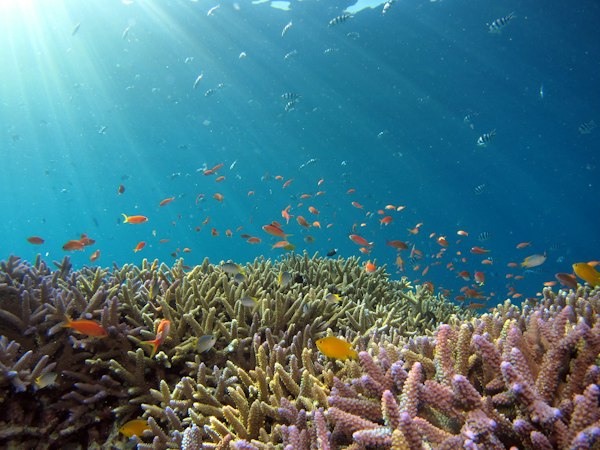
Hydrothermal vent on the ocean floor with mineral-rich plumes
Geochemistry

Hydrothermal Vent Ecosystems

Studying chemosynthetic life at high-temperature vent fields in the Atlantic and Pacific, where organisms thrive without sunlight through chemical energy conversion.

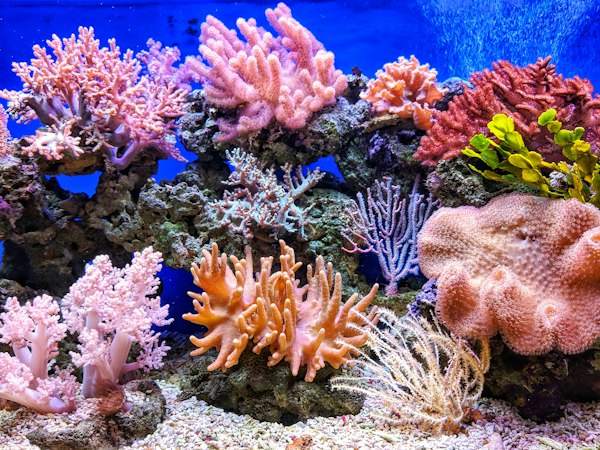
Coral reef ecosystem teeming with colorful marine life
Conservation

Coral Resilience & Restoration Genomics

Mapping heat-resistant coral genotypes across the Indo-Pacific and developing assisted gene flow protocols for reef systems facing thermal stress.

Marine Neurobiology

Neural architecture of cephalopods and distributed cognition in colonial organisms

Expeditions Into the Deep

From the Mariana Trench to the Mid-Atlantic Ridge, our fleet of research vessels and submersibles has completed over 230 deep-sea missions across every major ocean basin.

Active Mission — 2024

Operation Hadal Frontier

A three-year survey of the Tonga Trench using our next-generation autonomous submersible fleet. The mission has already documented 14 previously unknown species in the hadal zone below 6,000 meters, including a translucent snailfish with unique pressure-adapted cellular structures.

Depth: 8,200m Duration: 36 months Vessel: R/V Nautilus IV
2024
Deep ocean research submersible descending into dark blue water
Completed — 2023

Midnight Arctic Survey

Winter expeditions beneath the Arctic ice pack to study seasonal behavioral shifts in deep-water cetaceans. Our acoustic arrays recorded previously unknown low-frequency communication patterns among narwhal pods at 1,400 meters beneath continuous ice cover.

Depth: 1,400m Duration: 8 months Vessel: R/V Boreal Spirit
2023
Arctic ocean with ice formations and deep blue water
Completed — 2022

Azores Vent Fields Mapping

Comprehensive mapping of newly discovered hydrothermal vent fields along the Azores Plateau. The expedition produced the first high-resolution 3D models of chimney formations and documented symbiotic relationships between yeti crabs and chemosynthetic bacteria at extreme temperatures.

Depth: 2,800m Duration: 6 months Vessel: R/V Thalassa
2022
Underwater volcanic vent with bubbling minerals in deep ocean
Completed — 2020

Great Barrier Deep Transect

A systematic biodiversity survey from reef surface to mesophotic depths at the outer Great Barrier Reef. The transect sampled over 2,400 specimens and identified 38 new species of fish and invertebrate adapted to low-light reef environments at depths between 60 and 150 meters.

Depth: 150m Duration: 14 months Vessel: R/V Coral Pioneer
2020
Diver exploring a vibrant coral reef ecosystem

Numbers From the Abyss

Every descent yields data that reshapes our models of ocean ecosystems. These figures represent decades of systematic exploration, sample collection, and peer-reviewed discovery — and the pace is accelerating as our autonomous fleet expands.

Depth Layer — Abyssal
0
Deepest documented species encounter (meters)
Depth Layer — Hadal
0
New species identified and cataloged
Depth Layer — Bathyal
0
Deep-sea expeditions completed since 1987
Depth Layer — Surface
0
Nations collaborating on research programs

The Minds Behind the Missions

Our team of 84 scientists, engineers, and oceanographers represents 19 nations. Each brings a distinct disciplinary lens — from extremophile microbiology to acoustic engineering — to the shared mission of illuminating the deep.

Dr. Elena Vasquez, Lead Deep-Sea Biologist, looking confidently at camera

Dr. Elena Vasquez

Lead Deep-Sea Biologist
Pioneer in abyssal invertebrate taxonomy with 23 years of field experience. Led the Hadal Frontier mission's biological survey component across three Pacific trenches.
Prof. James Okafor, Marine Geochemist, wearing a lab coat

Prof. James Okafor

Marine Geochemist
Specialist in hydrothermal vent mineralogy and chemosynthetic energy pathways. His work on serpentinite-hosted ecosystems redefined models of abiogenic hydrocarbon synthesis.
Dr. Yuki Tanaka, Coral Genomics Specialist, in field research gear

Dr. Yuki Tanaka

Coral Genomics Specialist
Leading the Great Barrier Deep Transect's genetic analysis. Her assisted gene flow protocols have been adopted by marine restoration programs across Southeast Asia.
Dr. Marcus Chen, Submersible Engineering Lead, portrait outdoors

Dr. Marcus Chen

Submersible Engineering Lead
Architect of our autonomous submersible fleet. Designed the pressure-resistant hull systems that enable operations at depths exceeding 10,000 meters.
Dr. Amara Diallo, Marine Neurobiologist, working in laboratory

Dr. Amara Diallo

Marine Neurobiologist
Studies distributed neural networks in cephalopods and colonial marine organisms. Her recent work on octopus arm cognition has implications for bio-inspired robotic systems.

Join the Next
Descent

We accept applications from researchers, graduate students, marine engineers, and conservation practitioners for our expedition roster. Whether you specialize in molecular biology, acoustic engineering, or underwater robotics, there is a place in our fleet for rigorous minds drawn to the unknown.

We review applications quarterly. Next review: March 2025.